
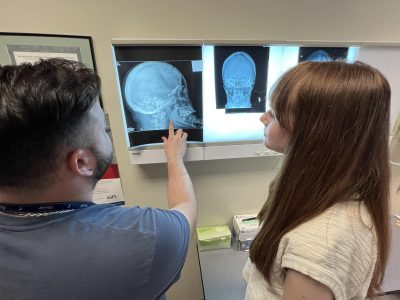
Johnson College has been awarded a $214,450 grant from the Appalachian Regional Commission (ARC) to support the acquisition of new, industry-standard equipment for the Radiologic Technology laboratory on the College’s Scranton campus.
The grant will be used to purchase and install advanced radiologic imaging equipment that reflects what students will encounter in clinical healthcare settings throughout Northeastern Pennsylvania and the Appalachian region. New equipment includes an overhead X-ray unit with a movable patient table and a portable system used for bedside and in-room imaging.
The project includes $107,225 in funding from the Appalachian Regional Commission, matched by funding from Johnson College that is supported in part through grants from the Moses Taylor Foundation and the AllOne Foundation.
This project supports ARC’s strategic goal of building Appalachia’s workforce ecosystem by investing in workforce development programs that align with industry needs and are designed to prepare students for in-demand careers.
Johnson College’s Radiologic Technology Program is accredited by the Joint Review Committee on Education in Radiologic Technology (JRCERT) and holds a five-year accreditation status. Program graduates are eligible to sit for the American Registry of Radiologic Technologists (ARRT) national certification examination.
The need for skilled healthcare professionals continues to grow. According to the Hospital and Healthsystem Association of Pennsylvania, workforce shortages in healthcare are among the most severe in the Commonwealth. The U.S. Bureau of Labor Statistics projects employment of radiologic and MRI technologists to grow five percent from 2024 to 2034, faster than the average for all occupations.
Career and technical education is central to Johnson College’s mission, and continued investment in modern radiologic technology ensures students receive hands-on, real-world training using equipment found in today’s healthcare settings. As a result, graduates are prepared to transition directly into clinical environments, supporting regional workforce needs while upholding the highest standards of patient safety and care.